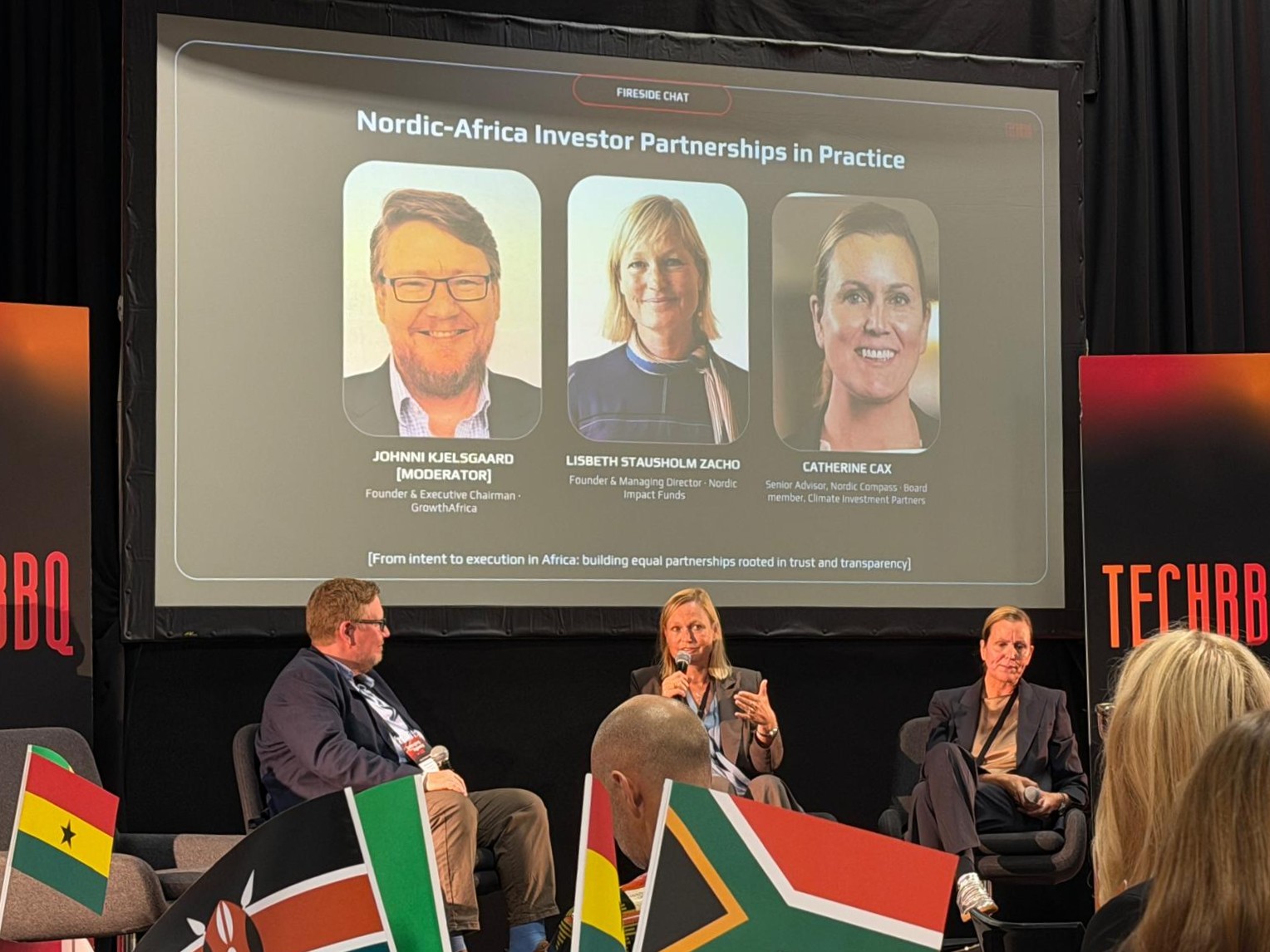
Copenhagen, two weeks on. The badges have been recycled, the LinkedIn connection requests accepted, and the WhatsApp groups formed in the mingling hours after the final panel have already gone through their first cycle of enthusiasm and silence. This is the moment when a summit reveals whether it was an event or an inflection point.
The Nordic-African Summit at TechBBQ 2026 deserves to be judged generously — and honestly. Generously, because the room itself was an achievement: Rwandan and Tanzanian diplomats, Danish ministry officials, DFI investment directors, Egyptian ecosystem builders, Kenyan agritech founders, and a diaspora that, for once, was on stage rather than in the audience. Honestly, because the summit's own speakers kept returning to a single uncomfortable image. A corridor with no traffic, one of them noted in closing, is just a sign on a wall.
The numbers that should have made the front page
Three figures from the summit deserve more attention than they received.
The first came from the capital panel: Norway's pension assets alone are roughly equal to the GDP of the entire African continent — about $2.2 trillion on each side of the scale. One Nordic country's retirement savings, matched against the annual output of 54 nations and 1.4 billion people. Whatever one concludes from that comparison, it makes the current state of play — Denmark's trade with Africa sitting at one to two percent of its imports and exports — look less like caution and more like absence.
The second came from the diaspora panel: roughly $100 billion flows into Africa every year in remittances, more than all development aid and foreign direct investment combined. And yet, as one economist pointed out, when the world's finance ministers gathered in Sevilla to map out how development would be financed, remittances appeared once in the document. The diaspora appeared not at all. India grew its remittance inflows fifty-fold in three decades — from $2 billion to over $100 billion — not by accident but by architecture. Africa's largest investor class remains, in the words of one panelist, a mosaic of engaged communities with no grand architect.
The third figure was quieter but arguably the most actionable: African loan default rates, several speakers noted, are lower than in many European markets. The risk that keeps Nordic capital on the sidelines is, to a meaningful degree, a perception problem. The Sun King story told on stage made the point concretely — years of repayment data, a first Kenyan securitization that took eighteen months of hand-holding, DFIs stepping in as first-loss capital, and eventually a senior debt tranche rated above the Kenyan sovereign. The risk was learnable. Someone just had to do the teaching.
From aid to trade — the phrase everyone agreed on, and what nobody resolved
"We don't want aid, we want trade" has been Tanzanian policy for over a decade, and it was the closest thing the summit had to a chorus. Denmark, to its credit, is responding with more than rhetoric: a suite of five new business instruments — grants, loans, equity, and technical assistance — designed to plug the financing gap that strands Danish SMEs between a few million kroner and the large-ticket sizes DFIs traditionally serve.
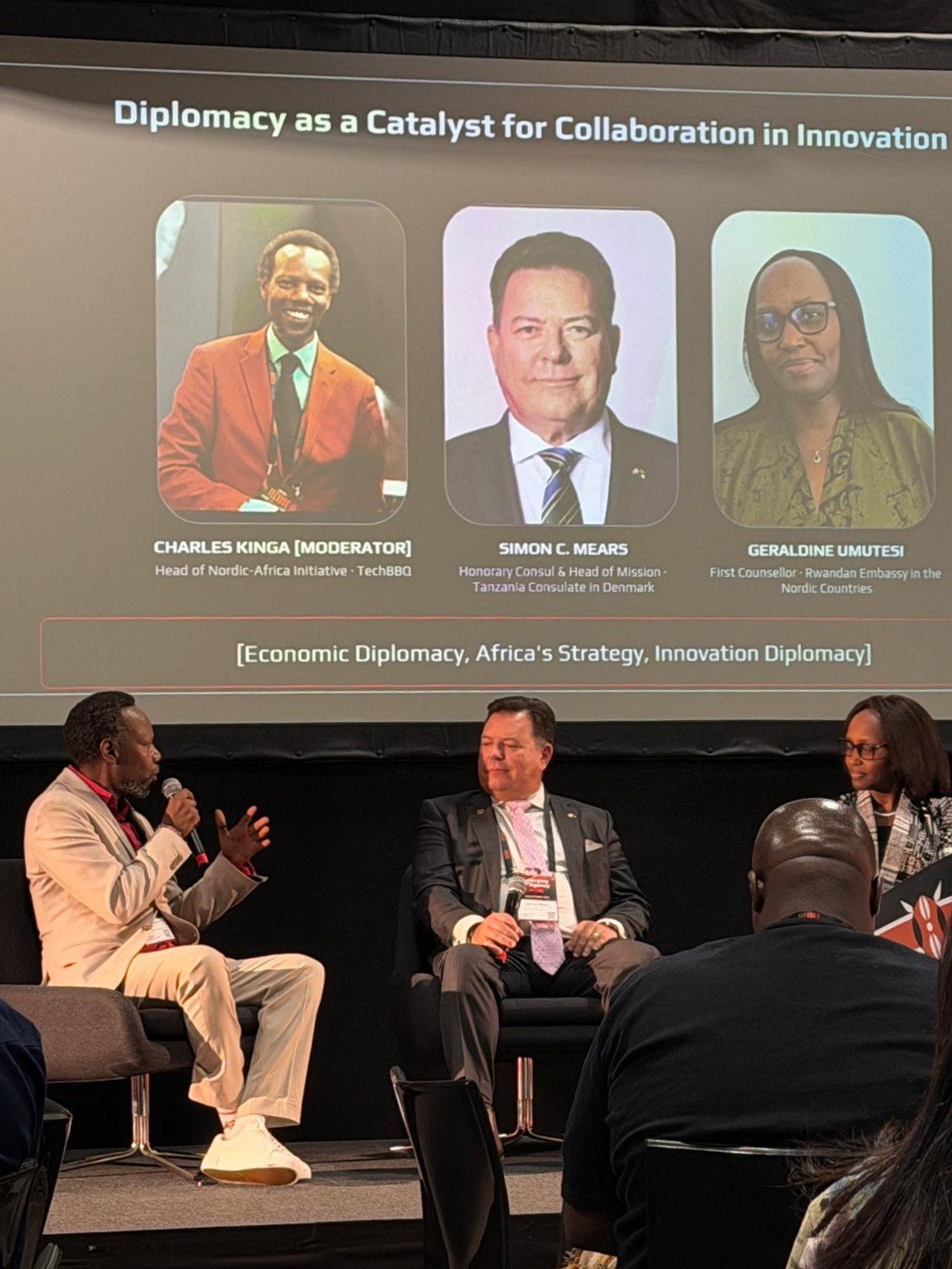
But the sharpest intervention of the entire summit came from the floor, not the stage. Technology transfer, an audience member observed, still runs one way. A Danish company entering Ghana or Botswana as a Danish company, operating as a Danish company, is not partnership — it is presence. True partnership means joint ventures, co-created intellectual property, and localization deep enough that value accrues on both ends of the corridor. The panel agreed. Agreement, of course, is the easy part.
The same tension surfaced in the investment discussions. The Silicon Valley playbook — ten-year closed funds, blitzscaling, unicorn hunting — was openly questioned by the very investors who once imported it. Open-ended structures, patient capital, revenue-based instruments, and above all domestic capital mobilization dominated the conversation. Kenya's pension funds are permitted to allocate ten percent to private equity; they deploy roughly one. Unlocking a single additional percentage point would exceed the country's entire venture capital pool. Ghana's pension-backed fund-of-funds showed it can be done. The blueprint exists. The question is who does the unglamorous structuring work to replicate it.
Solardey's view: the gap is not capital, and it is not projects. It is preparation.
Solardey attended this summit as what we are: a bridge business. We originate and advise on deals between Nigerian project owners and Nordic institutional capital, and we tell the stories that make each side legible to the other. So we listened with a specific question in mind — where, exactly, does the corridor break down?
Our answer, two weeks later: in the middle. Not at the capital end, where the money demonstrably exists. Not at the project end, where the demand is overwhelming — Nigeria alone, as the energy panel laid out, has gone from thirteen gigawatts of grid capacity at independence-era planning to four gigawatts today, serving a population that has quadrupled. Nigeria's future is locked in as a decentralized energy economy, and companies like SunFi are proving that consumers have already crossed the chasm: solar is no longer a hard sell, it is a distribution and financing challenge.
The corridor breaks down in the space between a promising project and a bankable one. We see it weekly in our own pipeline work: feasibility studies whose diesel consumption data contradicts their load estimates, financial models that would not survive an investment committee's first hour, strong local operators with no counterpart who speaks both Lagos and Stockholm. The Sun King securitization took eighteen months not because the asset was bad but because nobody had translated it before. That translation layer — technical review, honest project preparation, trusted local relationships, and the patience to say "this document is not ready" before it reaches a Nordic desk — is the freight the corridor is missing.
This is also where the diaspora argument stops being sentimental and becomes structural. The summit's most quotable line — don't invite us to participate, we need to be involved — is, from where we sit, simply a description of how deals actually close. Nordic institutions repeatedly told the room they need partners who understand the local market. The African diaspora in the Nordics understands both markets, holds relationships on both sides, and carries the one asset no instrument can manufacture: trust that predates the transaction. Using the diaspora as connective tissue is not inclusion policy. It is deal execution.
What we would like to see before TechBBQ 2027
The organizers closed with a hope that next year's stage would feature concrete examples — Danish companies operating in Africa, African companies operating here. We share that hope, and we would sharpen it. Success in twelve months should not be measured in panels or MOUs, but in a handful of specific artifacts: the first transactions closed under Denmark's new small-ticket instruments; a second and third securitization built on the templates already paid for; a pension-fund allocation, anywhere on the continent, that cites the Ghana model; and at least one deal in which a diaspora-led advisory firm sat on the term sheet rather than in the audience.
The corridor is real. The speeches have been given, and given well. What happens next depends on the people willing to do the slow, unphotogenic work in the middle — and Solardey, for one, intends to keep doing it.
Solardey is a media and deal-origination advisory bridging Nigerian project owners with Nordic institutional funders. Solardey — Stories that power change.