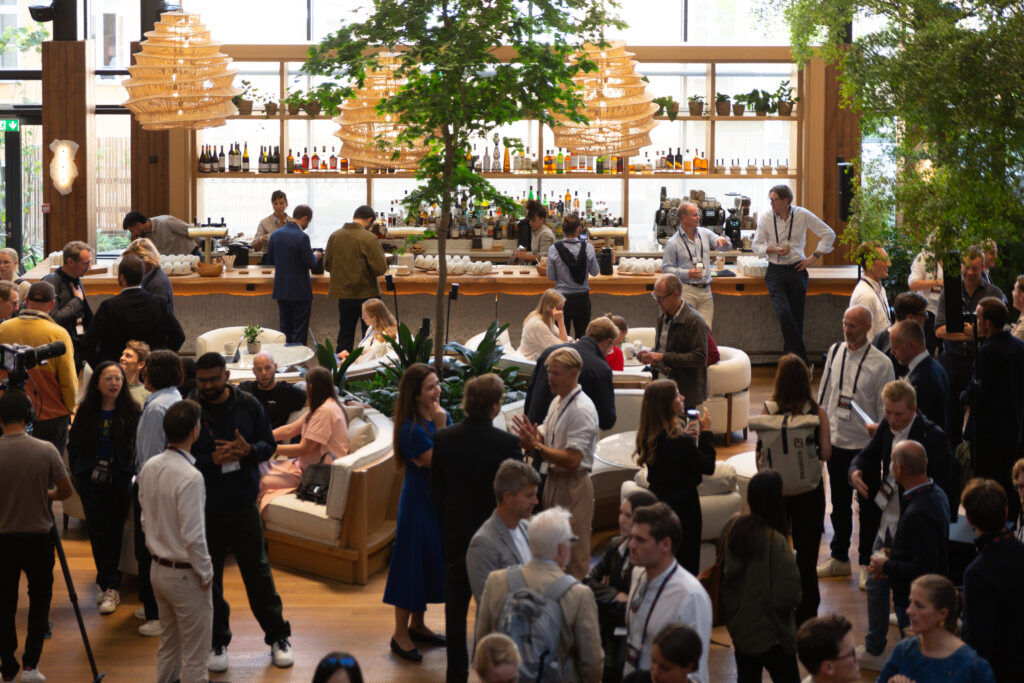
Two weeks after TechBBQ's Investor Day, one number is still sitting with me: 150.
European pension funds, a deep-tech growth investor told a room of 800 investors at Copenhagen's Maersk Tower, put roughly 150 times less into European technology than American pension funds put into their own. Not fifty percent less. Not twice less. One hundred and fifty times. "Your pension money is funding our US competitors," he said, and for a moment the room — venture capitalists, LPs, sovereign investors, the people who allocate Europe's risk capital — went quiet, because everyone understood he was describing them.
That number was the honest center of an afternoon built around a provocative panel title: Built in Europe, Bought by America.
A crisis of ownership, not talent
Nobody on stage disputed that Europe can build. Its share of the world's high-value patents has grown while America's has fallen from 75% to roughly 45%. Europe now counts nearly as many growth-stage deep-tech companies as the United States. European tech's total value has quadrupled in a decade. Denmark alone has become a life-science power far out of proportion to its size, drawing some 45% of all capital invested in the country over five years.
The problem starts when companies get big. Over the past fifty years, by figures cited on stage, Europe has produced 14 companies above the billion-dollar threshold to America's 241 — and many of the 241 were founded by Europeans who left. American startups raise roughly three times more capital. The pattern is not confined to Europe: investors with teams in Japan and Korea described the identical one-way bridge, pension savings flowing west while domestic champions starve.
The example that gave the abstraction teeth was defense. Panelists described European defense companies — the ones, as one investor put it, defending the continent as we speak — raising rounds of around €500 million, pleading for European lead investors, and ending up American-led anyway. Not because founders wanted it. Because when the tickets get big, European growth capital either isn't there or isn't willing. Denmark's state fund EIFO revealed it had just made its largest fund commitment ever in the sovereignty space, explicitly because the market won't yet do it alone.
The wounds Europe inflicts on itself
The afternoon's sharpest moments were self-critical. The unicorn chase, one veteran investor argued, has been a disaster for Europe: founders inflating valuations to look American, then finding the IPO window welded shut because no one can grow into the number. His prescription was almost unfashionable — raise what you need, price reasonably, sell well, make everyone at the table money — and he offered a Danish exit at a €300 million valuation as proof the boring path works.
He went further, naming what he called the industry's permanent lie: funds sold to LPs on ten-year lifespans when everyone signing the documents knows real company cycles run fifteen to twenty. The whole system, he suggested, is built on politely managed false expectations — and until timelines are honest, capital will stay nervous.
The fundraising panels confirmed how nervous. LPs described a congested market: capital hasn't come back from the last cycle, so it isn't going out, and what moves goes to managers who have already returned money — a vicious circle that punishes emerging managers hardest. The survival advice was unusually concrete. Don't raise a nine-figure first fund; one founder-turned-VC admitted his took two and a half years, including an anchor investor who walked after ten months of negotiation. Start small, prove the thesis, return. Treat fundraising as sales, not as a side effect of investing. And don't underestimate family offices: one panelist recalled a backer committing €5 million over a single cup of coffee, while institutions ran months of process for similar tickets.
Then there was the money nobody has organized: universities, foundations, unions — pools that commit billions in the US and sit largely idle in Denmark, waiting for someone to build the fund-of-funds infrastructure to educate and aggregate them. The capital exists. The plumbing doesn't.
The question I brought into the room
I did some reporting of my own that afternoon. Between sessions, I asked investors a simple question: are you currently investing in Africa?
The majority said no.
I want to be precise about what that means, because it isn't hypocrisy — it's symmetry. Everything Europe spent the day saying about itself relative to America, Africa can say about itself relative to Europe, at greater magnitude. Bankable projects that can't find growth capital. Domestic savings flowing everywhere but home. Foreign investors taking ownership because local capital lacks vehicles, gatekeepers and conviction. Founders who want regional capital and can't get it at scale. The Maersk Tower was, without knowing it, hosting a masterclass in what it feels like to be someone else's emerging market.
And the solutions discussed on stage travel. Sovereignty as an investable thesis. State capital — EIFO in Denmark, and in my corridor, DFIs like Swedfund and Norfund — deliberately absorbing the risk private money won't yet touch. Fund-of-funds structures that turn willing-but-unequipped capital into deployed capital. Honest timelines instead of borrowed playbooks.
From the Solardey desk
Solardey exists to build one of those bridges: connecting Nordic institutional capital with bankable African energy projects — real projects, real off-takers, real returns. Two weeks of distance from that room has only sharpened the conclusion I left with.
Europe's anxiety about being built here and bought elsewhere is legitimate. But the answer to it — patient, sovereign, well-structured capital that backs its own future — is the same answer Africa's energy transition is waiting for. The number 150 describes a choice, not a law of nature. So does every "no" I collected between panels.
Both can change. That's the story we'll keep telling.
Solardey — Stories that power change. Reported from TechBBQ Investor Day, Maersk Tower, Copenhagen, 25 August 2026, with accredited media access. Quotes lightly edited from live recordings.